


 LIPOELASTIC TEAM
 (1).png)
Cellulite - we’ve all heard the word, and most of us have seen it. It appears on the legs, buttocks, and stomach, showing as uneven or dimpled skin. But what exactly is cellulite, and why does it appear even if you eat well, stay active, and take care of your body?
You might be surprised to know that up to 90% of women experience some form of cellulite during their lifetime. Whether it’s cellulite on legs, tummy cellulite, or abdominal cellulite, it’s completely normal - a natural part of the body’s connective tissue structure, not a sign of poor health.
Cellulite: What’s Really Happening Under the Skin
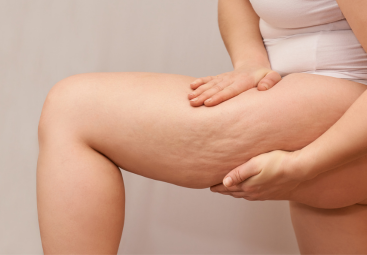
Cellulite develops when fat cells push against the skin while connective tissue bands (called septae) pull the skin downward, creating that dimpled look we associate with cellulite on stomach or butt cellulite.
Although often linked with excess fat, cellulite is more about skin elasticity, hormones, and circulation than body weight. That’s why even lean, athletic people can notice cellulite on abs or belly cellulite.
It’s also worth knowing that different body areas show it differently. Abdominal cellulite and cellulite on stomach may appear softer, while tummy cellulite and cellulite on legs can look more textured due to thinner skin and less muscle tone beneath.
Why Some People Have More Cellulite Than Others
Several factors influence how visible cellulite becomes:
- Hormonal balance: Oestrogen affects collagen and skin elasticity, which can impact how cellulite forms.
- Genetics: Inherited skin thickness, fat distribution, and circulation play a major role.
- Age: As skin loses collagen and becomes thinner, cellulite appears more pronounced.
- Lifestyle: Prolonged sitting, dehydration, and reduced blood flow can make cellulite more visible.
This is why many people explore cellulite therapy methods like gentle massage, movement, and compression wear - all designed to improve circulation and support the skin’s natural renewal process.
How Massage and Compression Can Support Skin Health
While there’s no “cure” for cellulite, stimulating blood and lymphatic flow can help your skin look and feel smoother. That’s the principle behind both cellulite therapy and the use of a massager for cellulite - they encourage microcirculation, which can improve skin tone and comfort.

FLOW leggings by LIPOELASTIC are designed to deliver that same massage-like effect throughout your day. The unique 3D knit structure gently stimulates the skin, promoting circulation and reducing that heavy-leg sensation many women experience.
► Read more about how FLOW leggings promote daily circulation and skin wellness in our blog: Massage on the Go: A New Era of Compression Leggings
In other words, they work like a massager for cellulite - just wearable, discreet, and beautifully comfortable.
Beauty from the Inside: The Role of Collagen
Healthy, supple skin starts beneath the surface - and that’s where LIPOELASTIC Collagen Drink can complement your daily routine. It combines marine collagen, hyaluronic acid, vitamin C, and essential minerals to support skin structure and hydration.
While collagen can’t “remove” cellulite, it may support your body’s natural ability to maintain elasticity and firmness - helping your skin look smoother over time.

Pairing gentle compression wear like FLOW leggings by LIPOELASTIC with inner support from collagen is a simple, holistic way to care for your legs, abdomen, and overall skin wellness.
► Discover how and why we developed our own collagen blend in: Collagen Supplements: Why We Developed Our Own
The Takeaway
Cellulite - whether it’s tummy cellulite, cellulite on abs, or abdominal cellulite - isn’t a flaw to fix but a feature to understand. Supporting your skin through cellulite therapy, light massage, hydration, and good nutrition can make all the difference in how it looks and feels.
Your body deserves care, not correction - and your journey toward healthier, more confident skin can start with small, consistent steps.
► Read next: Simple Everyday Habits That Can Help Reduce the Appearance of Cellulite
References
Cleveland Clinic. (2023). Cellulite: What It Is, Causes, Location & Treatment. Available at: https://my.clevelandclinic.org/health/diseases/17694-cellulite (Accessed 7 October 2025).
National Library of Medicine. (2023). Cellulite: Current Understanding and Treatment. Available at: https://pmc.ncbi.nlm.nih.gov/articles/PMC10324940/ (Accessed 7 October 2025).
National Library of Medicine. (2022). Cellulite: A Cosmetic or Systemic Issue? Contemporary Views on the Aetiology of Cellulite. Available at: https://pmc.ncbi.nlm.nih.gov/articles/PMC6232550/ (Accessed 7 October 2025).
PubMed. (2023). Participant Reported Improvement in Cellulite by Vari-Pad Apparel and Objective Measurements. The Whiteley Clinic, Surrey, UK. Available at: https://pubmed.ncbi.nlm.nih.gov/37750084/ (Accessed 7 October 2025).
Rossi A.B. & Vergnanini A.L. (2000). Cellulite: A review. Journal of the European Academy of Dermatology & Venereology, 14 (4), 251-262. Available at: https://pubmed.ncbi.nlm.nih.gov/11204512/ (Accessed 7 October 2025). PubMed+1
Avram M.M. (2004). Cellulite: A review of its physiology and treatment. Journal of Cosmetic and Laser Therapy, 6(4), 181-185. Available at: https://pubmed.ncbi.nlm.nih.gov/16020201/ (Accessed 7 October 2025)





 England



 Wales
Wales
 Scotland
 Northern Ireland
 United States of America
