


 LIPOELASTIC TEAM
 Lymphatic yoga - also known as Lymph Yoga - is a term that more and more people with Lipoedema are coming across as they search for gentle ways to feel better in everyday life. And it's easy to see why. Many women living with Lipoedema experience heavy, tight, or tired legs. After a long day, during hot weather, or after sitting or standing for extended periods, the body can often feel especially swollen and uncomfortable.
Alongside medical compression therapy, regular physical activity, and other conservative treatment approaches, many people ask themselves:
Is there something gentle I can do to support my body without overexerting myself?
Lymphatic yoga may be exactly that. ♡
In this article, you'll learn what makes this gentle form of movement so beneficial, how it can support people living with Lipoedema, and what to keep in mind before getting started. We've also included a simple everyday routine you can try at home.
 What Is Lymphatic Yoga and How Can It Help with Lipoedema?
Lymphatic yoga is a gentle form of yoga that combines slow, mindful movements with conscious breathing, targeted mobility exercises, and relaxation techniques. The goal isn't to master challenging sequences or advanced poses, but to activate the body gently while promoting relaxation and overall well-being.
For people living with Lipoedema, this calm and mindful approach can be particularly enjoyable. Rather than focusing on performance, lymphatic yoga encourages gentle movement and a stronger connection with your body.
You may also enjoy reading: Other sports and activities suitable for people with Lipoedema
What Does a Lymphatic Yoga Session Look Like?
A typical lymphatic yoga session may include:
- Deep diaphragmatic breathing to activate the diaphragm
- Gentle movements for the legs, arms, and joints
- Elevating the legs to promote comfort and relief
- Light stretching and mobility exercises
- Targeted exercises for the feet, ankles, and hips
- A relaxing cool-down
This combination makes lymphatic yoga easy to incorporate into everyday life- even on more challenging days. There's no need for special sportswear, a gym membership, or extensive preparation.
How Does Lymphatic Yoga Promote Lymphatic Circulation?
Lymph Yoga addresses a key point: unlike the heart, the lymphatic system does not have its own pump. Lymphatic flow therefore depends on movement, muscle activity, breathing, and changes in position.
Lymphatic Flow & the Muscle Pump: Why Gentle Movement Works
Gentle movements activate the “muscle pump”: with each contraction and relaxation, the muscle gently compresses the surrounding tissues, which helps the lymph flow toward the lymph nodes. Deep abdominal breathing further enhances this effect through changes in abdominal pressure.
Lymph Yoga specifically utilizes these mechanisms: calm movement rather than stillness, and mindful breathing rather than tension.
Lymphatic Yoga Is Not a Substitute for Medical Treatment
Lymph Yoga does not cure Lipoedema or reduce pathological adipose tissue.
It is not a substitute for medical treatment, medical advice, or appropriate compression therapy.
However, it can serve as a gentle and beneficial complementary practice in daily life.
When Can Lymphatic Yoga Be Especially Helpful?
Many people living with Lipoedema find lymphatic yoga particularly beneficial when experiencing:
- Heavy legs
- Tightness or a feeling of fullness in the body
- Reduced mobility
- Stress or inner tension
- Days when more strenuous exercise feels overwhelming
- A desire to reconnect with their body through gentle movement
Lymphatic Yoga and Compression Garments: A Supportive Combination
Regular movement plays an essential role in managing Lipoedema, and many people find it even more comfortable when paired with well-fitting compression garments.
Many individuals report feeling more stable and better supported during movement while wearing compression because it provides even support to the affected tissues.
Compression Garments After Surgery - and Why They Continue to Matter
Even during lymphatic yoga, wearing properly fitted compression garments can be beneficial - as long as they remain comfortable in every position.
During gentle stretches, floor exercises, and relaxation poses, many women with Lipoedema find that well-designed compression leggings provide reassuring support without restricting movement.
Whether to wear compression during yoga is ultimately a personal choice. What feels comfortable and genuinely helpful varies from person to person.
♡ The most important thing is to listen to your own body- not what you think you should be doing.
Which Compression Leggings Are Best for Lymphatic Yoga?
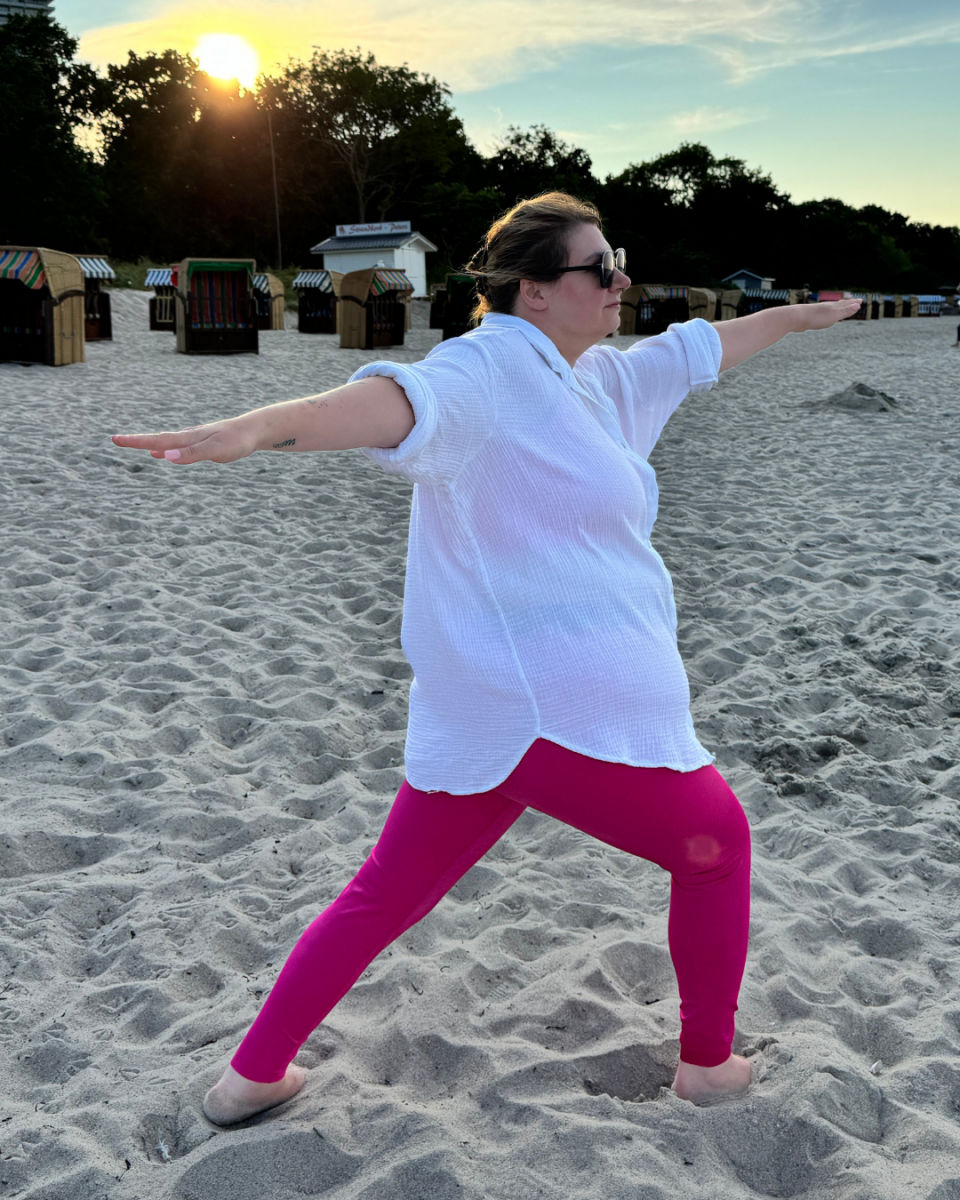
Our ACTIVE Leggings are designed for both movement and everyday wear. Their high waistband and seamless leg construction ensure lasting comfort during lymphatic yoga without digging in or limiting mobility. Whether you're going for a walk, doing light exercise, or enjoying a gentle yoga session, they're a practical everyday companion.
On days when your body feels more sensitive or when you prefer even gentler support, our FLOW Leggings may be the ideal choice. They provide lighter compression while offering exceptional comfort. Their unique 3D knit structure also creates a subtle massage effect that many wearers find soothing.
There is no single "best" option.
♡ Your body - and how it feels on any given day - will tell you which one is right for you.
Lymphatic Yoga Routine: 5 Simple Exercises to Do at Home
Just 10 to 20 minutes are enough to gently activate your body and encourage relaxation. You can perform this routine on a yoga mat, your sofa, or even on the floor- no previous yoga experience required.
Step 1: Deep Diaphragmatic Breathing
Sit or lie down in a comfortable position. Place your hands on your abdomen or lower ribs and take a slow, deep breath in. As you exhale, allow the breath to leave your body more slowly than you inhaled.
This deep breathing changes the pressure within your abdomen, which can help support healthy lymphatic flow. Repeat for 5–8 breaths, noticing how your body becomes a little heavier and more relaxed with every exhale.
Step 2: Gentle Foot and Ankle Movements
While lying down, slowly point and flex your feet, as if gently pressing and releasing a gas pedal. Then make slow circles with both ankles.
These simple movements activate the calf muscles and lower-leg muscle pump, making them especially helpful on days when your legs feel heavy, tight, or fatigued.
Step 3: Elevate Your Legs
Rest your legs on a chair, a firm cushion, or against a wall for 5–10 minutes.
This position uses gravity to encourage lymph fluid to move back toward the torso, helping relieve pressure within the tissues.
Breathe calmly and allow your body to relax completely. Many people find this position particularly soothing after a long day.
Step 4: Gentle Hip Mobility
Lie on your back with your knees bent. Slowly let both knees rock from side to side like a pendulum.
Keep the movement smooth and comfortable, avoiding any pulling or pain.
This gentle rotation mobilizes the hips and lower back and may help release tension around the pelvis.
Step 5: Relax and Check In with Your Body
Finish your practice with several slow, deep breaths. Stretch out your legs and take a moment to notice how your body feels. Do your legs feel lighter? Warmer? More relaxed? This quiet moment of awareness is an important part of the routine.
♡ A Gentle Routine - Not a Medical Therapy ♡
This routine is not a replacement for medical treatment or professional therapy.
However, it can become a calming daily ritual - especially on days when more demanding exercise simply isn't possible.
Things to Keep in Mind Before Practicing Lymphatic Yoga
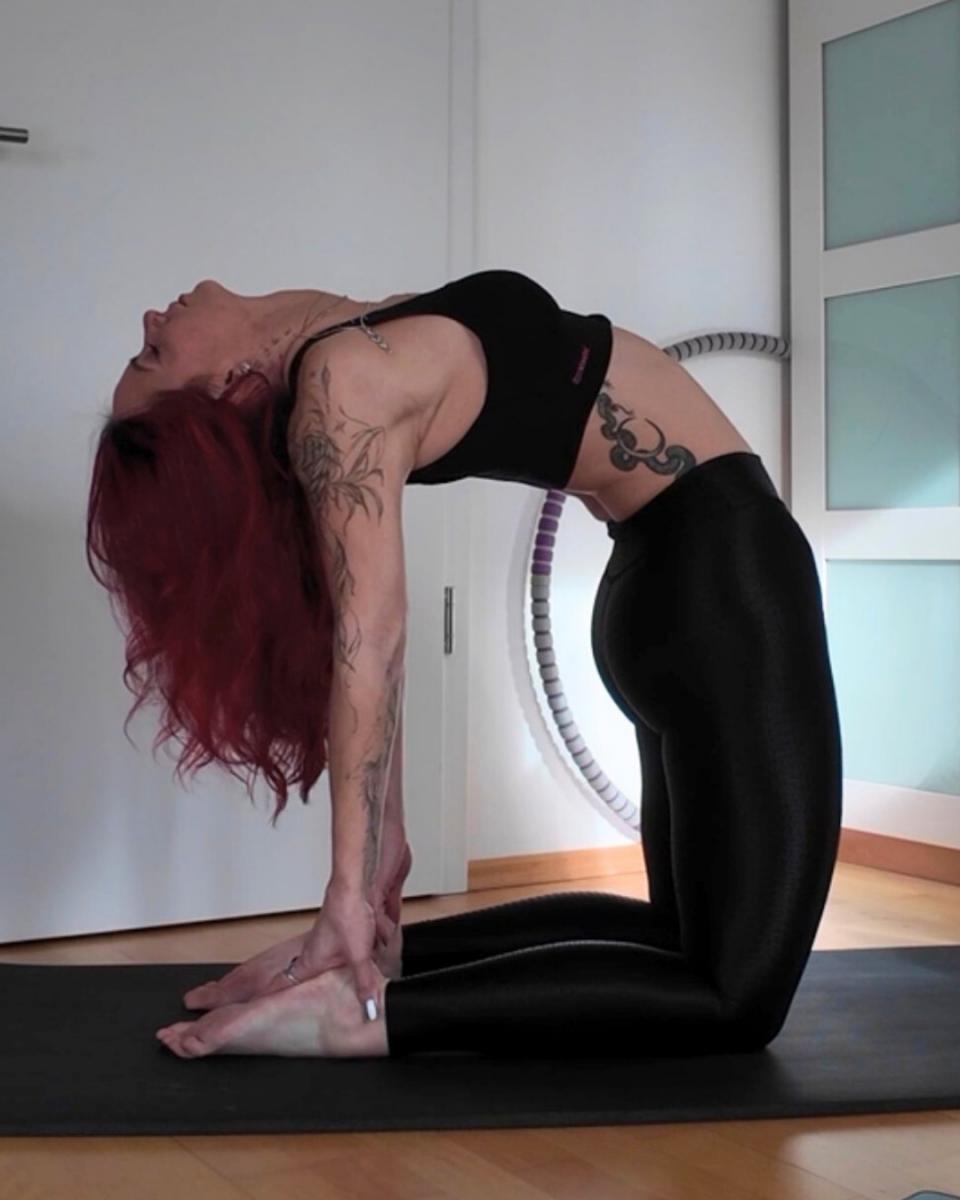
Lymphatic yoga should never cause pain or discomfort. If you experience strong pressure, pulling sensations, tingling, or pain, modify the movement or stop the exercise.
Helpful guidelines include:
- Start slowly - 10 to 20 minutes is plenty.
- Avoid excessive heat, as hot yoga may quickly become uncomfortable.
- Never apply pressure to painful or sensitive areas.
- Wear compression garments only if they remain comfortable throughout your practice.
- If you're unsure whether an exercise is appropriate for you, consult your doctor, lymphatic therapist, or another qualified healthcare professional.
Remember: every body is different, and every day is different too. That's not a setback - it's simply how the body works.
You might also like these blog posts…
- Lipoedema: 9 Tools to Help Relieve Symptoms Daily
- Lipoedema and insulin resistance: What you need to know
Frequently Asked Questions
♡ Is lymphatic yoga effective for Lipoedema?
Lymphatic yoga does not cure Lipoedema. However, it can complement medical treatment by encouraging gentle movement, deep breathing, and an overall feeling of lightness and well-being.
♡ Can I practice lymphatic yoga every day?
Yes. Because the exercises are gentle, practicing for 10–20 minutes each day is generally well tolerated, provided the movements remain comfortable and pain-free.
♡ Should I wear compression garments during lymphatic yoga?
It depends on your personal preference.
Some people feel more comfortable practicing while wearing compression garments, while others prefer not to.
The most important thing is that your compression garment feels comfortable and does not restrict your movement.
♡ Can lymphatic yoga replace manual lymphatic drainage?
No.
Lymphatic yoga does not replace manual lymphatic drainage, medical compression therapy, or any other treatment recommended by your healthcare provider.
Instead, it should be viewed as a supportive complementary practice.





 England



 Wales
Wales
 Scotland
 Northern Ireland
 United States of America
