


 LIPOELASTIC TEAM
 Perhaps you know this feeling: you have already undergone surgery for lipoedema, yet over the years, the symptoms have returned. Or perhaps you are facing the decision for the first time and wondering what to expect.
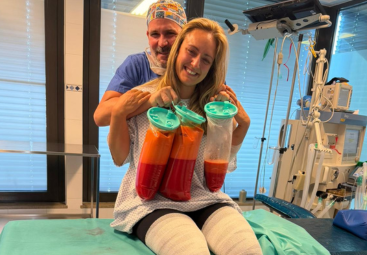
The story of our Lipoedema Hero Juliane shows that liposuction is rarely the final step in the journey with lipoedema - and that going through the experience a second time can often feel more considered, informed and self-determined than the first. ♥︎
When Lipoedema Surgery Is Not the End of the Story
For many people affected by lipoedema, the decision to undergo liposuction comes with great hope: less pain, greater mobility and a lighter feeling in the body.
 But not every journey is straightforward. Sometimes, there is a long road between the initial diagnosis, the first surgeries and the next step – both physically and emotionally.
This was also the case for Juliane. She was diagnosed with lipoedema in the summer of 2016. Today, around ten years later, she is preparing to undergo several more operations on her legs. Not because she has taken the decision to go through this journey again lightly, but because her symptoms have become so severe that she has made a conscious decision to proceed.
Her experience shows just how important clear information, appropriate aftercare, trust in your medical team and the right compression can be following lipoedema surgery.
The Diagnosis: Between Relief and Overwhelm
Nearly ten years ago, Juliane’s legs were operated on for the first time – two procedures, one on the front and one on the back. She now describes the time surrounding these operations as stressful. At the time, she still lacked knowledge about the condition, her body and what good aftercare following liposuction really involved.
After the first operation, she collapsed several times and had to stay an additional night at the clinic. Her two-piece compression garment dug into her skin severely, and the marks remained visible for a long time. At the same time, she felt that she had not been sufficiently informed about topics such as post-operative compression, lymphatic drainage and aftercare.
Looking back, one thing is particularly clear to Juliane: liposuction does not end with the procedure. The time afterwards is crucial – the body needs support, rest, appropriate care and an environment that understands what is important.
When Symptoms Return: Facing the Thought of Surgery Again
Many people who have undergone surgery will recognise this concern: What if the symptoms return? What if you find yourself facing the decision to undergo surgery again?
For Juliane, this was a difficult process. It took her years to admit to herself that she wanted to undergo surgery again – because, at first, the thought felt like a failure.
As someone affected by lipoedema, you often have the feeling of never doing enough: not enough exercise, not enough discipline, not enough compression. If symptoms return after surgery, this feeling can become even stronger.
However, lipoedema is a chronic condition, and chronic conditions do not always follow a predictable course. If symptoms return or further treatment becomes necessary, this does not mean personal failure - even if it may feel that way at the time.
Why Further Surgery May Be Necessary

Over time, Juliane’s symptoms became more severe again: significant pain in everyday life, noticeable fluid retention and a feeling of heaviness in her legs that increasingly affected her knees and joints. Eventually, it became clear to her that carrying on as before was no longer a solution.
However, the decision to undergo further surgery was not an easy one. The memory of her first surgical experience was difficult, alongside the financial burden of further procedures and the fear that it could be just as challenging again.
At the same time, she had a strong desire: a life with fewer symptoms, a greater sense of ease and more confidence in her own body.
Fear, Overwhelm and Yet, Hope
When it became clear to Juliane that she would need to undergo several more operations, her initial feelings were primarily fear, disappointment and overwhelm. She was particularly concerned about the pain, as well as reaching her physical and emotional limits or disappointing others.
These thoughts are not unusual. Surgery is never just a physical procedure - it affects everyday life, work, your social environment and often your own self-perception.
For Juliane, the upcoming surgeries are also bringing previous emotional struggles and issues around self-esteem back to the surface. During this phase, she describes herself as exhausted and emotionally unsettled - while at the same time feeling hopeful about a new chapter with fewer symptoms.
Juliane Approaches the Situation Differently Today
Despite all her fears, Juliane now says something important: “I’m a different woman now than I was back then.”
Over the past ten years, she has built a support system that helps her manage life with lipoedema. She understands her body better, knows more about the condition and knows what she wants to pay attention to this time.
While she felt overwhelmed and uninformed the first time, she is approaching her surgery preparation more consciously today: not without fear, but more informed, more confident and with greater clarity.
Preparing for Surgery: Organising, Planning and Setting Boundaries
Preparing for lipoedema surgery does not begin for Juliane on the day of the procedure, but several weeks beforehand. There is plenty to organise: appointments for manual lymphatic drainage, arrangements with her compression garment provider and surgeon, as well as financial planning.
She also consciously prepares her home for the period after surgery – for example, with absorbent bed pads, as fluid may continue to leak during the first few days after liposuction, as well as a shower stool and a leg elevation cushion.
For Juliane, the most important preparation is not only practical but also mental. She allows herself to feel afraid rather than pushing those feelings away and listens carefully to herself and her body. This also means consciously saying no in the final weeks leading up to surgery – to stressful appointments, external expectations and anything else that may add unnecessary pressure.
Sleep, rest and looking after her mental wellbeing become priorities.
What Should Be Different This Time
Juliane has learned a great deal from her previous experiences – above all, the importance of having a knowledgeable and supportive team around her. For her, this includes a surgeon she trusts, a good compression garment provider, appropriate physiotherapy, manual lymphatic drainage and the right post-operative compression. She also needs to trust her instincts.
After her first experience, she knows how important it is to feel that she is in good hands. Lipoedema surgery is not simply a medical procedure, but a process – and that process requires people who are professionally competent and who take those affected seriously.
Aftercare: Compression, Lymphatic Drainage and Patience
When Juliane thinks about the period following her operations, one thing is at the top of her list: the right compression. Following liposuction, post-operative compression can support the body during the healing process.
The most appropriate compression garment should always be selected individually in consultation with the healthcare team responsible for her care.
For Juliane, one thing is clear: this time, she wants to feel well supported from the very beginning – with an appropriate post-operative compression garment, regular lymphatic drainage and a compassionate approach towards herself.
Healing requires not only medical aftercare, but also patience, trust and a willingness to give the body the time it needs.
This is where LIPOELASTIC post-operative compression garments can play a role. They have been specifically developed for use following liposuction and can provide support during the healing phase, when the body may need additional support. ♥︎
What Juliane Wishes She Had Known Earlier

When asked what she knows today about preparing for surgery, healing and aftercare that she wishes she had known back then, Juliane answers very directly: “Everything.”
At the time, she knew very little about the condition, and lipoedema was nowhere near as widely recognised as it is today. There were fewer opportunities to connect with others, less visibility and fewer personal experiences she could turn to for guidance.
Today, she knows how important it is to ask questions, take her time, trust her instincts and carefully choose her doctors and healthcare providers.
Her Message to Others Affected by Lipoedema
Despite everything, Juliane says today: Nothing was in vain. Even though her experiences were painful, they brought her to where she is today. She has learned from her previous experiences, got to know her body better and understood what she needs.
Her most important message to others affected by lipoedema is: There are still ways forward – even when previous results have been disappointing, and even when fear is present. Connecting with others affected by lipoedema can provide strength, offer guidance and help ease the feeling of having to carry everything alone.
Conclusion: A New Beginning, but This Time with More Knowledge
Juliane’s story shows just how complex the journey with lipoedema can be. A diagnosis can bring both relief and overwhelm. Surgery can offer hope while still leaving some questions unanswered. And sometimes, it can take years to acknowledge that another step may be necessary.
Today, Juliane is taking this step differently than she did before: with more knowledge, more preparation, more self-care and a support system around her.
If you are also preparing for liposuction, it can help to learn about topics such as surgery preparation and post-operative compression early on – and to remember that you do not have to go through this journey alone. ♥︎





 England



 Wales
Wales
 Scotland
 Northern Ireland
 Isle of Man
